 enp
enp
 IT
IT
Juniper, Coriander and Angelica: The Holy Trinity of Gin


Juniper, Coriander and Angelica: The Holy Trinity of Gin
In the world of gin, botanicals are not simply flavourings added to a neutral spirit. They are plant-based ingredients—berries, seeds, roots, peels, flowers, leaves, fruits and spices—that, through techniques such as maceration, distillation or vapour infusion, shape the identity and sensory profile of the spirit.
Each botanical performs a specific function: some provide freshness and aroma, while others add structure, roundness, depth or persistence. It is the balance between them that defines the character of each recipe.
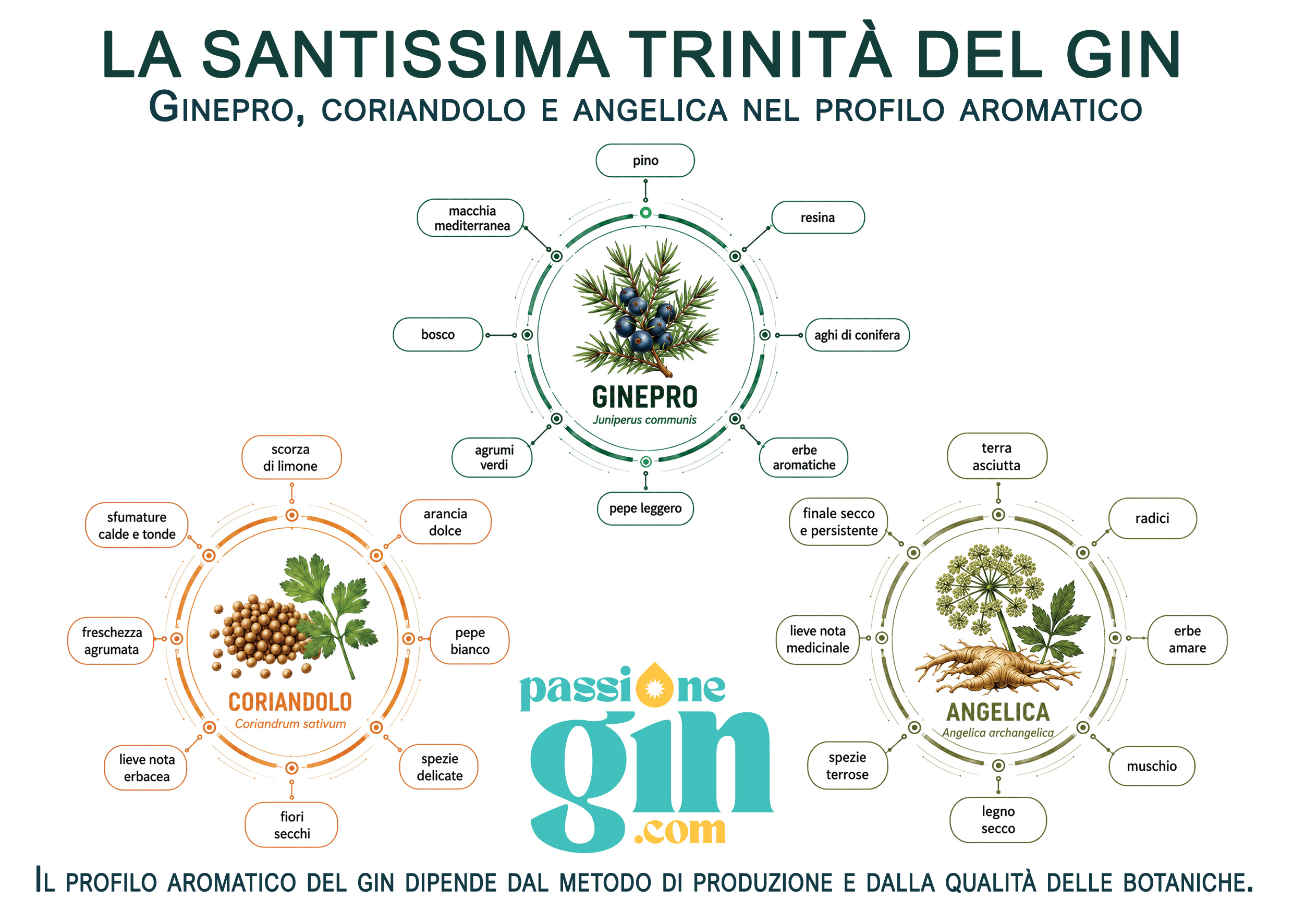
In the language of English distillers, juniper, coriander and angelica are often described as a kind of gin “Holy Trinity”. They are three botanicals commonly found in classic recipes and together form an aromatic foundation capable of combining resinous notes, citrus freshness, spice and structure.
Juniper is the beating heart of every gin: the botanical that makes it recognisable and distinguishes it from other spirits. Without its aromatic imprint, a spirit cannot properly be called gin. Coriander, used mainly in seed form, contributes citrus and spicy nuances. Angelica root, on the other hand, works at a deeper level, adding dryness, body and persistence.
Together, these three botanicals form the backbone of many classic gins: juniper defines their identity, coriander broadens their aromatic profile and angelica helps integrate the aromas, bringing balance and continuity to the palate.
Juniper: Gin's Aromatic Signature
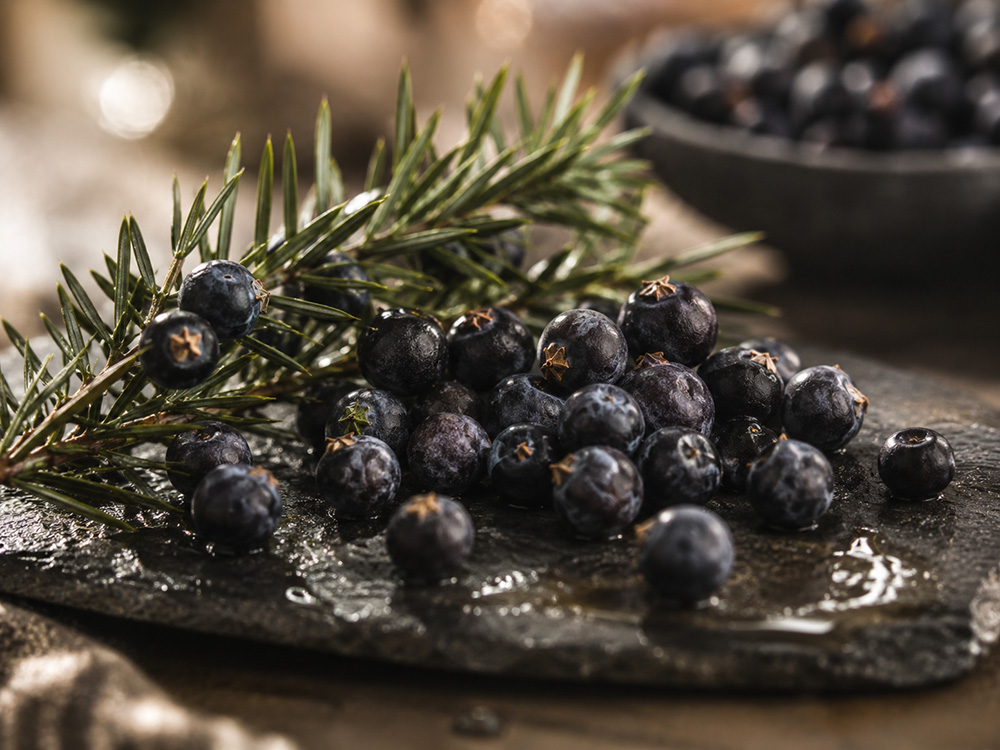
Juniper is the symbolic botanical of gin. Its berries—which are technically small, fleshy cones—are responsible for the resinous, balsamic and dry character that makes gin immediately recognisable.
When smelling a traditional gin, especially a London Dry or classic Dry Gin, juniper may reveal notes of pine, resin, woodland, Mediterranean herbs, light spices and an almost balsamic freshness. On the palate, it contributes dryness, clarity and aromatic persistence.
Juniper is the backbone of gin. The other botanicals interact with it, enhancing, softening or supporting its character without compromising its recognisability.
What Does Juniper Taste Like in Gin?
Juniper can evoke:
- pine;
- resin;
- conifer needles;
- aromatic herbs;
- light pepper;
- green citrus;
- woodland;
- Mediterranean scrub.
In some gins, juniper is sharp, dry and dominant. In others, it is softer and partially concealed by citrus, flowers or spices. In contemporary gins, juniper often leaves more room for modern and locally sourced botanicals. Even in the most creative gins, however, it remains the essential aromatic reference point.
Coriander: Citrus Freshness and Elegant Spice
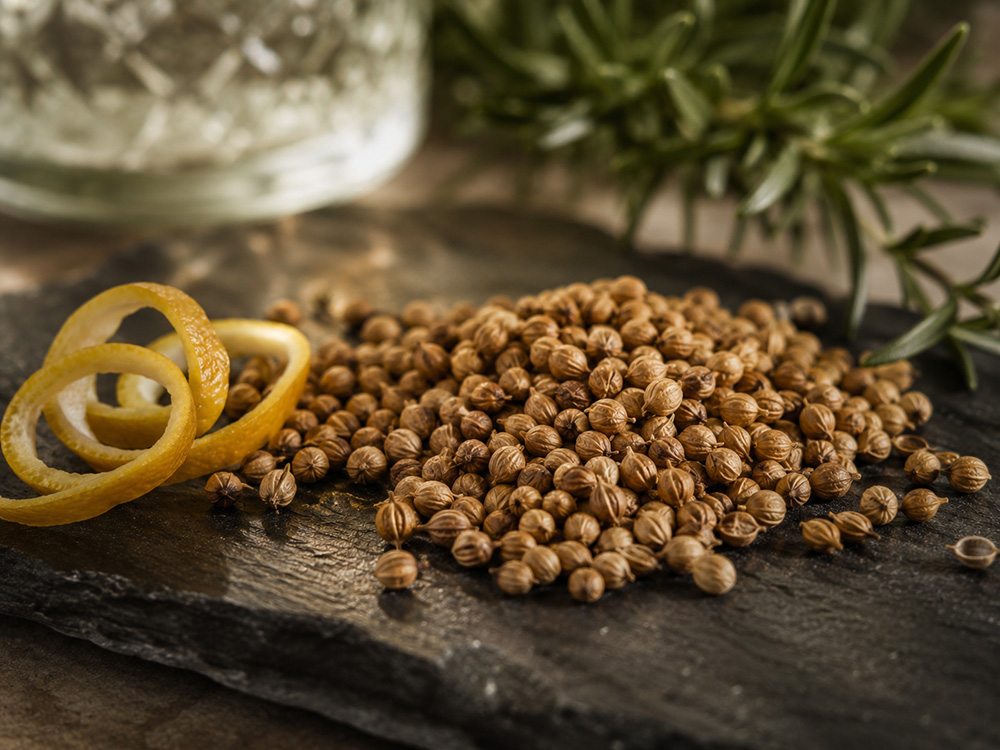
Coriander is one of the most widely used botanicals in gin, often considered second in importance only to juniper. Gin recipes do not normally use the fresh leaves commonly found in Asian or Latin American cooking, but rather coriander seeds.
This distinction matters because the seeds have a very different aromatic profile from the leaves. They do not taste like fresh coriander; instead, they offer warmer, citrusy, spicy and slightly floral notes.
Within the aromatic profile of gin, coriander brings balance. It opens up the aroma and lightens the resinous character of juniper.
What Does Coriander Taste Like in Gin?
Coriander seeds can evoke:
- lemon peel;
- sweet orange;
- white pepper;
- delicate spices;
- dried flowers;
- a light herbal note;
- citrus freshness;
- warm, rounded nuances.
This combination of citrus and spice makes coriander an extremely useful botanical.
Angelica: Root, Structure and Persistence
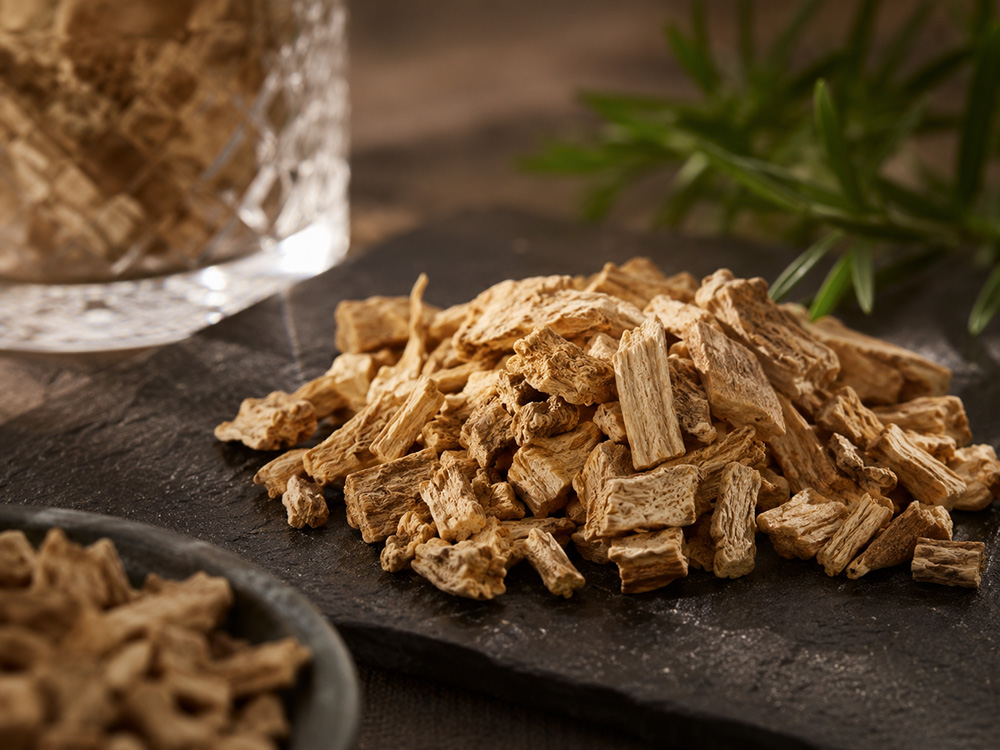
Angelica is less familiar to the general public, but it plays an important role in gin production. Angelica root is normally used for its dry, earthy, musky and slightly bitter contribution.
Unlike juniper and coriander, angelica does not immediately stand out with a strong aroma. Its role is more technical and structural: it helps integrate the aromas, gives body to the spirit and extends the finish.
In a well-constructed gin, angelica acts almost like an aromatic foundation. It is not always directly recognisable, but in recipes that include it, its contribution can make the profile more structured, coherent and persistent.
What Does Angelica Taste Like in Gin?
Angelica root can evoke:
- dry earth;
- roots;
- bitter herbs;
- musk;
- dry wood;
- earthy spices;
- a light medicinal note;
- a dry, persistent finish.
These characteristics make it particularly useful in classic gins and London Dry styles, where it contributes to the dry sensation and complexity of the finish.
Angelica is not used to make a gin immediately more fragrant. Its purpose is rather to make the spirit more solid, cohesive and persistent on the palate.
How Juniper, Coriander and Angelica Work Together
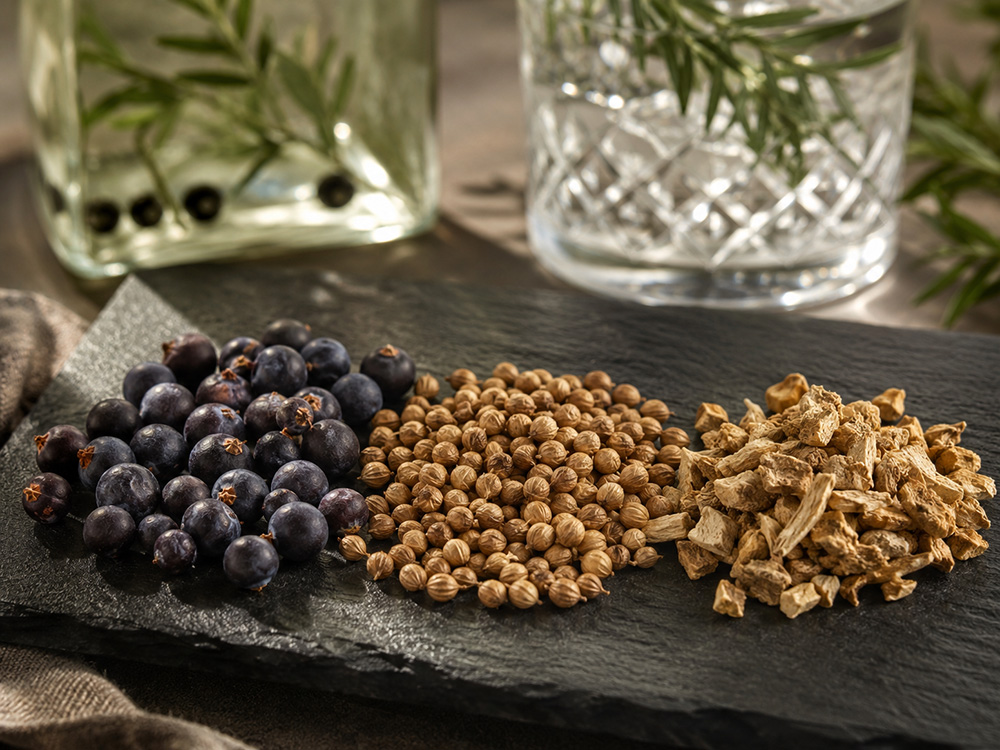
Juniper, coriander and angelica do not act as isolated elements. Together, they build the balance of a gin.
Juniper defines the identity of the spirit through its resinous, green and balsamic notes. Coriander opens up the aromatic profile, adding freshness, citrus nuances and delicate spice. Angelica completes the structure with earthy and dry notes, contributing body and persistence.
When their proportions are carefully calibrated, the gin feels harmonious: juniper remains recognisable, coriander lightens and brightens the profile, while angelica supports the finish without weighing it down.
If one of the three botanicals becomes too dominant, the balance can shift significantly. A strong juniper presence may make the gin more resinous and austere; a generous amount of coriander may accentuate its citrus and spicy character; a high proportion of angelica may push the profile towards more earthy, bitter and dry notes.
There is therefore no single universal balance. It is the relationship between these botanicals that determines the style and character of the recipe.
How to Recognise These Botanicals During a Tasting
To learn how to distinguish juniper, coriander and angelica, it is best to taste gin in a simple way, without immediately covering it with tonic water or garnish.
Pour a small amount of gin into a tasting glass and smell it slowly. Do not bring your nose too close, as the alcohol may mask the more delicate notes.
Look first for juniper: balsamic, resinous, green and conifer-like aromas. Then try to identify coriander through citrusy, spicy and slightly warm nuances. Finally, focus on the finish, where angelica may emerge through dry, earthy and persistent sensations.
After tasting the gin neat, add a few drops of water. This can help open up the aromas and make the botanicals easier to distinguish. Only afterwards should you try the gin with a neutral tonic water to understand how its profile changes in a mixed drink.
Which Gin to Choose Based on Its Aromatic Profile
Understanding the role of botanicals also helps when choosing a bottle.
Those who enjoy dry, classic and clean gins should look for profiles in which juniper is clearly present, perhaps supported by angelica and other roots. These gins are ideal for Martinis, Negronis and minimalist Gin and Tonics.
Those who prefer fresher and more aromatic gins can look for expressions in which coriander interacts with citrus, flowers or aromatic herbs. These are well suited to summer Gin and Tonics, Collins-style drinks and citrus-forward cocktails.
Those looking for more complex and gastronomic gins may appreciate recipes with a stronger presence of roots, spices and earthy notes, in which angelica contributes additional depth.
The best choice ultimately depends on how the gin will be served: neat, in a Gin and Tonic, in a classic cocktail or paired with food.
The Holy Trinity of Gin in Mixology
In cocktails, juniper, coriander and angelica do more than define the aromatic profile of gin. They also contribute to its balance when combined with tonic water, vermouth, bitter liqueurs, citrus and other ingredients.
Juniper gives the drink recognisability and direction. Its resinous and balsamic notes help the gin retain its identity even when mixed. In a Gin and Tonic, it contrasts with the tonic water's sweet-bitter profile; in a Martini, it supports the cocktail's dry structure and interacts with the vermouth; in a Negroni, it helps balance the bitter component and sweet vermouth, preventing the drink from becoming too soft or heavy.
Coriander brings freshness and citrusy spice, making the gin more versatile. In a Gin and Tonic, it works well with classic, Mediterranean or lightly citrus-flavoured tonic waters and can be enhanced by simple garnishes such as lemon, orange or grapefruit peel. In a Martini, it may add a softer, spicier nuance, while in a Gin Fizz or Tom Collins it amplifies the citrus component and gives the drink greater vibrancy.
Angelica, by contrast, works on structure. In cocktails, it helps prevent the gin from disappearing behind stronger ingredients, supports the dry character of a Martini and adds depth to a Negroni. In a Gin and Tonic, it contributes to a cleaner, more persistent finish, reducing the perception of excessive sweetness and giving greater continuity to the palate.
To highlight these botanicals, it is best to start with a neutral or lightly aromatic tonic water and a restrained garnish. Lemon or grapefruit peel is often enough; a rosemary sprig can complement a more resinous gin, while a thin strip of orange peel works well with a spicier profile.
When these botanicals are well integrated, gin retains its character in both simple mixed drinks and more structured cocktails.
Mistakes to Avoid
The first mistake is assuming that more botanicals automatically mean higher quality. A gin made with many botanicals may be interesting, but it may also feel confused. A gin made with fewer botanicals can be far more elegant if they are properly balanced.
The second mistake is covering the gin with overly intrusive garnishes. Very sweet fruit, intense spices or excessive aromatic herbs can mask the work of juniper, coriander and angelica.
The third mistake is choosing a tonic water without considering the gin's profile. A highly aromatic tonic may work with some gins, but it risks overpowering more delicate ones. To understand a bottle properly, it is better to begin with a classic, unobtrusive tonic water.
The fourth mistake is serving gin too warm or with too little ice. Ice does more than chill the drink: it also helps control dilution. A warm, watery Gin and Tonic loses the definition of its botanicals.
Conclusion
Juniper, coriander and angelica are three essential botanicals for understanding the aromatic profile of gin.
Together, they form the aromatic foundation of many classic and contemporary gins. Learning to recognise them makes it easier to taste with greater awareness, choose bottles more precisely and prepare better-balanced cocktails.
The next time you taste a gin, try to identify these three elements.
Want to learn more?
Discover all the gin botanicals and browse our gin selection on Passione Gin.